


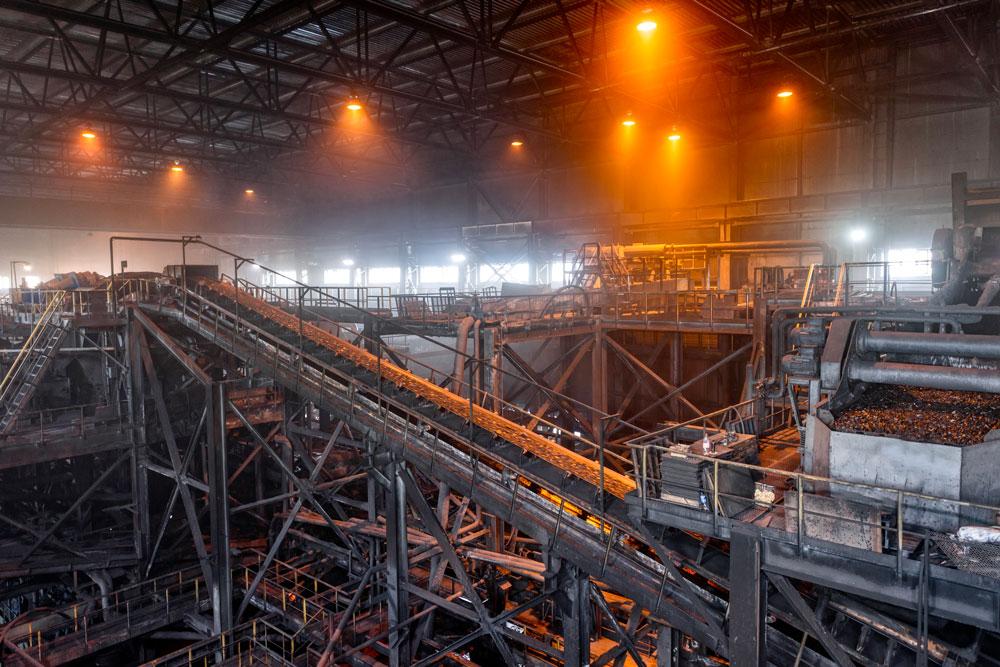
The aluminum scrapping industry has evolved from simple collection and sorting operations into sophisticated material processing enterprises that employ advanced technologies, comprehensive quality control systems, and integrated logistics networks. Modern scrapping operations must navigate complex market dynamics, regulatory requirements, and technical challenges while maintaining profitability across diverse aluminum grades and contamination levels.
Professional aluminum scrapping encompasses the entire value chain from initial material identification and collection through processing, quality control, and final product delivery to end-use markets. This comprehensive approach requires substantial technical expertise, specialized equipment, and strategic market positioning to capture optimal value from diverse aluminum waste streams.
The industry’s transformation reflects broader trends toward circular economy principles, sustainability reporting requirements, and supply chain transparency that create both opportunities and obligations for scrapping operations. Understanding these evolving requirements enables professional operators to develop competitive advantages while meeting the increasing demands of environmentally conscious customers and regulatory authorities.
Aluminum Scrap Classification and Grading Systems
The foundation of professional aluminum scrapping operations rests on accurate material classification and grading according to industry standards that determine market value and processing requirements. The Institute of Scrap Recycling Industries (ISRI) provides comprehensive specifications that define acceptable contamination levels, physical characteristics, and preparation requirements for various aluminum scrap categories.
Clean aluminum sheet and plate materials, classified as ISRI Taint Tabor, command premium pricing due to their high aluminum content and minimal contamination levels. These materials typically originate from manufacturing operations, building renovation projects, and transportation equipment recycling, requiring careful handling to maintain their classification and market value.
Mixed aluminum scrap, including ISRI Twang and Telic grades, encompasses diverse materials with varying contamination and alloy compositions. These grades often require advanced mechanical and thermal processing technologies to ensure efficient separation and recovery of usable metal fractions.
Processing Technologies and Equipment
Professional aluminum scrap processing involves a combination of mechanical, thermal, and chemical operations designed to maximize metal recovery and purity. Modern facilities integrate advanced shredding, crushing, and sorting technologies capable of handling a wide variety of scrap types—from profiles and UBCs to castings, wheels, and engine blocks.
At GME Recycling, we employ state-of-the-art solutions such as the Ventiduedenti Shredder and the Hammer Mill Max1700, designed to process both light and heavy-duty aluminum scrap efficiently. These systems ensure precise particle sizing, minimal waste generation, and optimal feedstock preparation for the subsequent decoating and melting phases.
Decoating systems, such as pyrolytic kilns, remove organic contaminants like paint, oil, and plastic, which can later be reused as fuel during smelting. This integrated approach reduces energy consumption, minimizes emissions, and enhances the quality of recovered aluminum.
Sustainability and Circular Economy in Aluminum Recycling
Aluminum is infinitely recyclable without losing its properties, making it a cornerstone of the circular economy. Recycling aluminum requires up to 95% less energy than producing it from raw bauxite, significantly reducing CO₂ emissions and environmental impact.
At GME Recycling, our mission is to design and implement complete aluminum recycling plants that align with the highest environmental standards. By combining innovation with decades of experience, we help our partners achieve higher yields, lower operating costs, and full compliance with EU regulations.
Through integrated plant solutions—covering shredding, sorting, decoating, and melting—we enable our clients to turn aluminum scrap into high-purity ingots ready for reuse in various industries, from automotive to construction and packaging.
Professional aluminum scrapping is no longer a simple recovery process—it is a high-tech, sustainable industry that plays a critical role in reducing global resource consumption. With advanced systems like GME’s Max 1700 Hammer Mill, decoating kilns, and customized furnace technologies, recyclers can achieve unprecedented levels of efficiency and quality.
At GME Recycling, we continue to pioneer innovation in aluminum recycling by delivering turn-key solutions that help our partners worldwide close the loop on production, reduce environmental impact, and embrace a truly sustainable future.
Comments are closed.

