


GME Recycling

Aluminium Can Recycling: 76% are recycled worldwide, but quality is the next challenge
Aluminium beverage cans have become one of the strongest examples of large-scale material recycling. According to the 2026 Global Beverage Container Recycling Dataset, 77% of aluminium cans are collected for recycling globally and 76% are effectively recycled. But for recycling plants, achieving a high recycling rate is only part of the challenge. The next step is preserving the quality and

Aircraft Aluminium Sheets Recycling: why high-value scrap needs a different Approach
In aluminium recycling, not all scrap should be treated in the same way. Generic mixed aluminium scrap, post-consumer materials, industrial offcuts, aluminium cans, profiles and aerospace aluminium sheets can all enter the recycling chain, but they do not have the same technical characteristics, the same value or the same requirements in terms of handling, preparation and melting. This is especially
ULAB Recycling Plant: Why Smelting, APC, Refining and Casting Must Be Engineered as One System
In a modern ULAB recycling plant, the performance of the rotary furnace cannot be evaluated in isolation. Smelting is only one section of a wider production system that begins with battery breaking and separation and continues through lead smelting, air pollution control, refining, alloying and casting. For plant operators, investors and technical managers, this distinction is fundamental. A furnace with
Lithium Guard: the Questions We’re Asked Most Since Its Launch
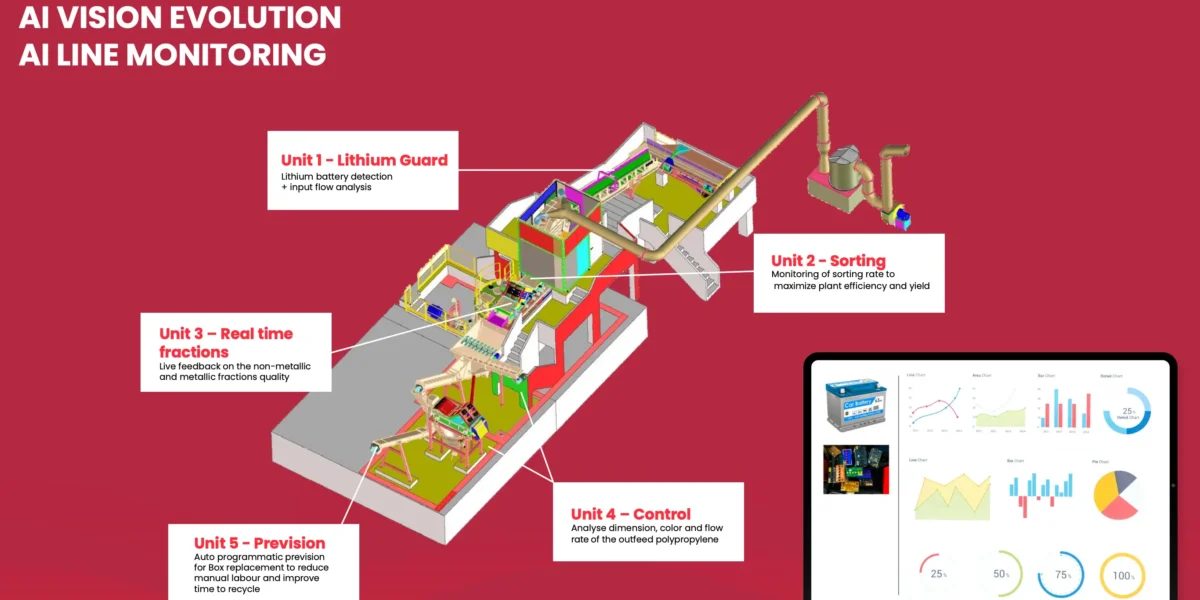
When GME Recycling officially introduced Lithium Guard, we expected interest from the ULAB recycling industry. What surprised us was the volume—and the quality—of the questions. In just a few months, our engineering team has been contacted by recyclers, plant managers and technical consultants from around the world, all asking essentially the same question: How can ULAB recyclers safely manage the

Lithium Battery Detection in ULAB Recycling Plants: Why It Is Becoming a Critical Safety Requirement
Used lead-acid battery recycling plants are facing a new technical challenge: the increasing risk of lithium batteries entering ULAB scrap streams. For decades, ULAB recycling lines have been engineered around a relatively predictable input material: used lead-acid batteries. The process is designed to open the battery, separate lead paste, metallic lead, polypropylene, separators and electrolyte, and recover valuable fractions through

Lithium Guard: AI-Based Lithium Battery Detection for ULAB Recycling Plants
The composition of battery scrap is changing rapidly. Lead-acid battery recycling plants can no longer assume that every unit entering the collection and processing chain is a conventional used lead-acid battery. The increasing circulation of lithium-ion batteries in automotive, two-wheeler, consumer electronics and stationary storage applications is creating a new operational challenge: lithium batteries may accidentally enter mixed ULAB scrap

Turnkey vs. Modular Lead Smelting Plants: Which Configuration Fits Your Business Model?
Investing in a lead recycling facility is not simply a matter of selecting a furnace with the required nominal capacity. The investor must define how used lead-acid batteries will be received, broken, separated, smelted, refined and transformed into a saleable product. Material availability, feed composition, environmental requirements, existing infrastructure and future expansion plans all influence the final plant architecture. One

GME Vibrating Screen with PowerWash System for ULAB Recycling Plants
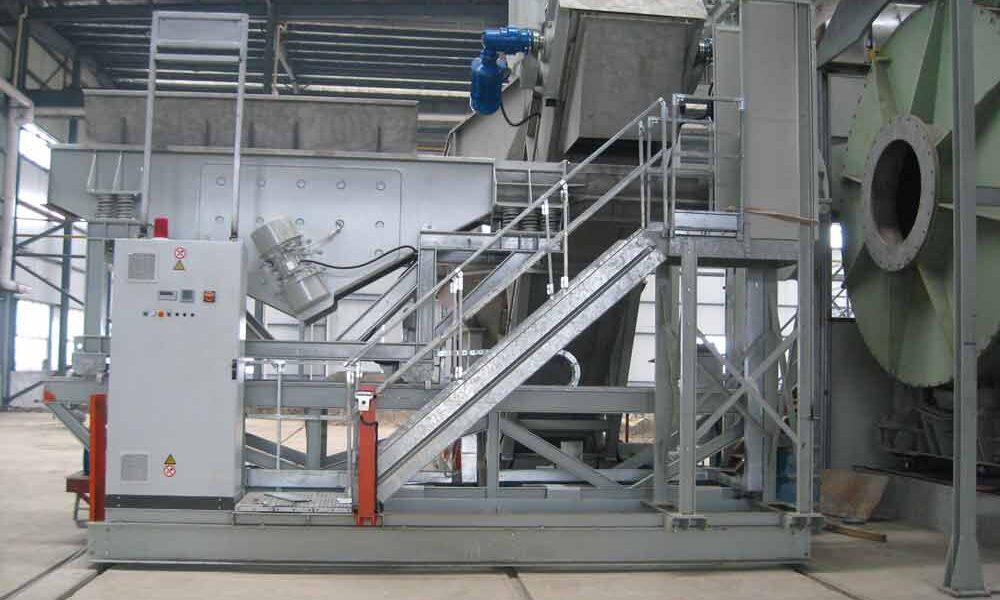
In GME’s ULAB recycling process, the quality of the lead fractions obtained is determined before the melting stage. After the hammer mill crushes the spent lead-acid batteries, the crushed material is still a complex mixture of metallic lead, very fine lead paste, electrolyte, polypropylene, and other plastic materials such as separators and AGMs. The lead paste fraction must be immediately

Pre-Shredding in LAB Recycling: is it really necessary?
Ask any lead-acid battery recycling plant operator what equipment they would remove first if they could, and the pre-shredder frequently tops the list. Yet the same piece of equipment continues to appear in new plant designs and retrofit proposals, often presented as a prerequisite for efficient processing. The reality, as GME Recycling’s engineering experience consistently demonstrates, is more nuanced —

Refining Kettles and Softening Furnaces for Secondary Lead
Lead refining equipment transforms crude lead bullion from smelting operations into high-purity products meeting stringent battery manufacturing specifications. While rotary furnaces and other primary smelting technologies achieve 96-98% lead purity through initial processing, battery manufacturers demand 99.85-99.99% purity with precisely controlled trace element concentrations. This final purification—removing copper, antimony, arsenic, tin, silver, and other impurities—occurs in specialized refining kettles and

Legal Seat. Via Monte Bianco 4, 20900 Monza MB - ITALIA
REA MB – 1891571 - P.IVA (VAT) - 08357310963
