


GME Recycling

Dubai aluminum recycling market: opportunities in the Middle East hub
Dubai has emerged as a pivotal center for aluminum recycling activities in the Middle East, leveraging its strategic geographic position, advanced infrastructure, and business-friendly regulatory environment to attract significant investments in sustainable metal processing operations. The emirate’s commitment to becoming a circular economy leader aligns perfectly with the growing global demand for recycled aluminum materials and sustainable manufacturing practices. The

Aluminum scrap prices 2025: strategic guide for industrial recyclers
The aluminum recycling industry stands at a critical juncture as global sustainability initiatives, energy cost pressures, and supply chain reconfigurations fundamentally reshape market dynamics and pricing structures. Understanding these evolving patterns has become essential for recycling operations seeking to optimize their investments, improve profitability, and position themselves strategically within an increasingly complex marketplace. Energy-intensive primary aluminum production faces mounting pressure

Lead smelting and battery recycling: how GME’s plants meet environmental standards
As regulatory pressure increases globally, lead smelting operations must meet stringent environmental standards. GME designs turnkey battery recycling plants that exceed emissions and sustainability requirements. In this article, we examine how GME meets and anticipates regulatory expectations across design, process, and technology. Regulatory overview Key frameworks Lead smelters are subject to strict rules such as: EU Industrial Emissions Directive (IED)

Inside a modern lead smelting plant: technology, safety, and sustainability
Modern lead smelting plants are built for performance, compliance, and circularity. They integrate state-of-the-art technology to recover lead from ULABs while meeting the strictest environmental and safety standards. Let’s take a tour inside a GME-engineered plant and explore what makes it a benchmark in the recycling industry. Integrated lead recycling workflow Process Overview Plants are designed for seamless flow across:
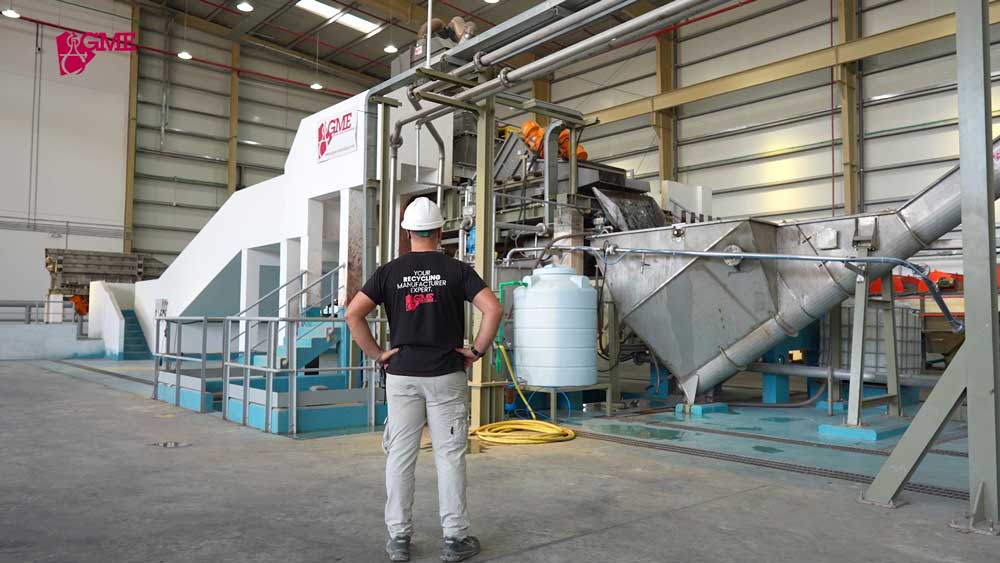
How to smelt lead safely and efficiently in industrial battery recycling plants
Lead smelting is a key stage in the closed-loop recycling of used lead-acid batteries (ULABs). By recovering lead from battery scrap through high-temperature processes, industrial smelters contribute to resource efficiency and environmental safety. In this article, we explore how lead is smelted safely and efficiently in modern battery recycling plants, with a focus on rotary furnace technology. Understanding the lead

How hot does a lead smelter get? Temperature management in battery recycling
Precise temperature control is vital in lead smelting to ensure complete reduction of battery paste and efficient recovery of lead. Operating too hot or too cold can lead to slag formation, incomplete smelting, or excessive emissions. Let’s examine how hot a smelter really gets and how GME ensures thermal stability in its designs. Temperature fundamentals Melting point vs. operating range

Which emerging metal sorting technology offers the Best ROI in 2025?
In the fast-evolving landscape of metal recycling, staying ahead means investing in technology that not only improves recovery rates but also delivers a measurable return on investment (ROI). With regulatory compliance, labor challenges, and material complexity rising, many operators are asking: Which sorting technologies offer the best ROI today? We explore three emerging solutions—enhanced eddy-current separators, hyperspectral imaging sorters, and

Metal Sorting Automation: how to maximize ROI with AI and Robotics
Labor shortages, safety concerns, and rising quality standards are driving metal recyclers to adopt automation—especially in the sorting phase. AI-powered robotic systems are no longer futuristic; they’re operational, scalable, and delivering results today. This article outlines how to leverage robotic sorters and intelligent automation to improve recovery, reduce costs, and maximize ROI. Why automate metal sorting? Manual sorting is: Inconsistent

How can industry improve scrap sorting efficiency?
Improving scrap sorting efficiency is critical to unlocking the full value of recycled metals and reducing both costs and environmental impact. Here are several strategies the industry can adopt: Invest in Advanced Sensor-Based Sorting • Eddy-Current Separators: more powerful, multi-stage eddy-current machines can distinguish non-ferrous metals (aluminium, copper, brass) at higher throughput and with lower energy use. • Near-Infrared (NIR)

7 Proven ways to boost scrap sorting efficiency in Metal Recycling Plants
Improving metal scrap sorting efficiency is essential to unlocking the full economic and environmental potential of metal recycling. From maximizing purity to reducing operational costs, optimized sorting operations directly impact profitability. In this article, we explore seven field-tested strategies that metal recycling facilities can adopt to enhance sorting precision, streamline workflows, and deliver cleaner output. Invest in advanced sensor-Based Sorting

Legal Seat. Via Monte Bianco 4, 20900 Monza MB - ITALIA
REA MB – 1891571 - P.IVA (VAT) - 08357310963
