


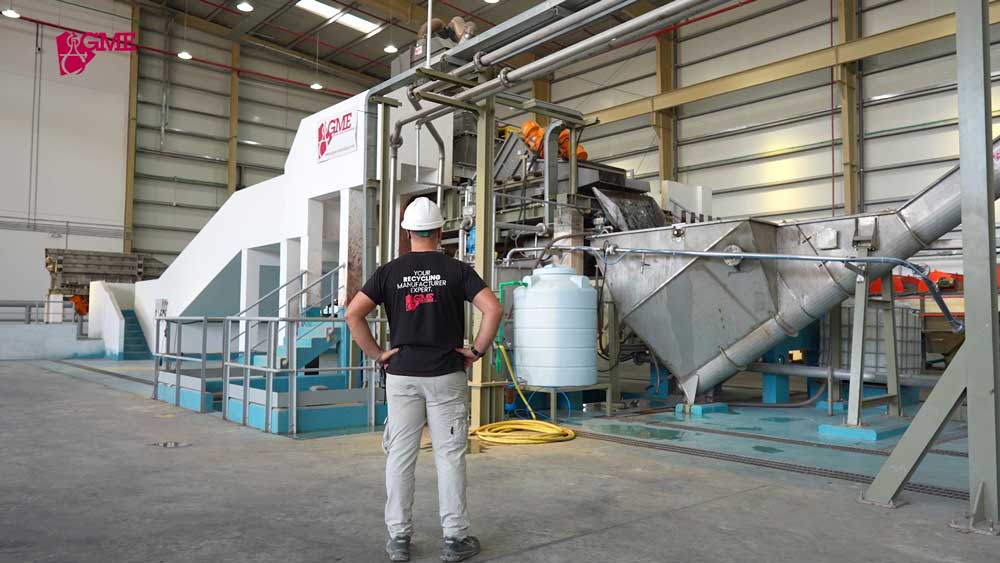
Lead smelting is a key stage in the closed-loop recycling of used lead-acid batteries (ULABs). By recovering lead from battery scrap through high-temperature processes, industrial smelters contribute to resource efficiency and environmental safety. In this article, we explore how lead is smelted safely and efficiently in modern battery recycling plants, with a focus on rotary furnace technology.
Understanding the lead smelting process
Lead smelting in battery recycling involves converting lead paste and grids into molten lead through a combination of heat and chemical reduction. The process includes:
- Pre-treatment: batteries are broken down, and components like acid, plastic, and metals are separated. Desulfurization reduces SO₂ emissions.
- Smelting: thermal reduction of lead compounds in rotary furnaces at ~1,200 °C using reducing agents like coke or natural gas.
- Refining and casting: purification and transformation into reusable lead ingots, suitable for new batteries or industrial use.
This closed-loop process ensures the safe handling of hazardous materials while maximizing resource recovery.
Safety and emissions controls
Advanced ventilation and filtration systems
Modern smelters are equipped with high-efficiency baghouse filters, cyclones, and water quenchers to capture lead fumes, acid gases, and particulate matter. GME’s lead smelters integrate dedicated filtration for lead emissions and ensure rapid cooling of exhaust gases to prevent dioxin formation.
Operator protection and automation
To protect personnel, plants implement remote operation, full PPE protocols, and real-time air quality monitoring. Automated systems manage furnace controls, reducing manual exposure. Negative pressure ventilation systems help maintain a safe plant environment.
Leak detection and emergency systems
Lead smelters are fitted with heat sensors, gas detectors, and emergency cut-off valves to prevent accidental exposure or fire risks.
Efficient smelting technologies
Rotary furnace advantages
Rotary furnaces are preferred in ULAB recycling due to:
- High fuel efficiency through oxy-fuel combustion
- Continuous operation with high throughput
- Capability to process paste, slag, and filter dust in a single batch
- Easier temperature control and slag handling
Comparative efficiency
Compared to traditional blast furnaces, rotary furnaces:
- Require less maintenance
- Operate at lower energy cost per ton of lead
- Produce fewer emissions thanks to integrated pollution control
Operational best practices
Temperature control and maintenance
GME furnaces use zoned temperature control and multiple thermocouples to maintain uniform heating. Automatic regulation ensures minimal fuel waste and optimized melting. Regular refractory inspection ensures operational integrity and long furnace lifespan.
Training and SOPs
Well-documented protocols and operator training are essential to maintain safety and consistency. GME offers technical training and SOP documentation tailored to each installation.
Raw material quality management
Monitoring input battery quality helps optimize smelting efficiency. Removing contaminants and balancing feed ratios lead to better throughput and lower emissions.
Digital integration and process monitoring
SCADA integration
Supervisory Control and Data Acquisition (SCADA) systems enable centralized control, real-time data visualization, and predictive maintenance. Historical data trends help improve decision-making.
Smart automation
Modern smelters leverage AI algorithms for feedstock optimization and automatic burner adjustment based on real-time feedback.
Efficient and safe lead smelting is vital to sustainable battery recycling. From thermal efficiency to emission abatement, every aspect of GME’s smelters is designed with performance and compliance in mind.
Contact GME today to request a custom lead smelter quote and learn how our technology can optimize your facility’s performance while meeting the most demanding environmental standards.
Comments are closed.

